
Shadows are often seen as something you need to control in photography. Too dark. Too harsh. Too much contrast. Not flattering.
But what if you looked at it differently?
What if, instead of trying to eliminate shadows, you made them part of your image?
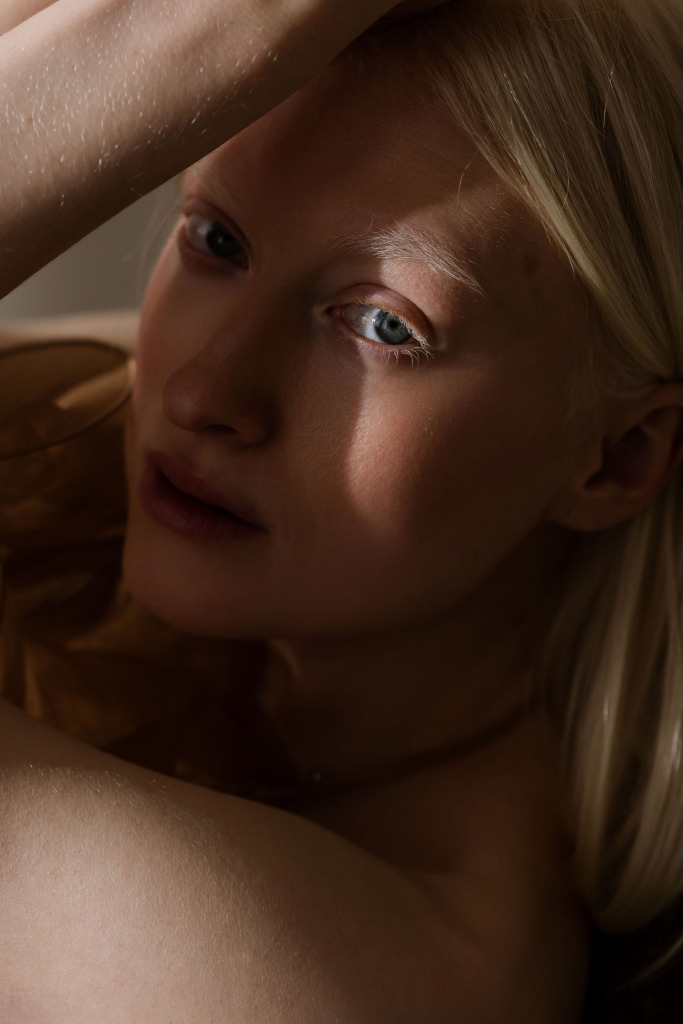
Shadows aren't a problem you need to solve during a photoshoot. Think of them as an extra styling tool.
Photographing with shadows: Where do you start?
Did you know that the light in our photo studio changes throughout the day? A beam of sunlight that falls in exactly the right spot in the morning can be completely gone a few hours later. This changes not only the amount of light in your image, but also the direction, length and intensity of your shadows.
With a little preparation, you can use shadows as an extra styling element. To make a portrait feel more sensual, give a fashion image a stronger editorial edge or add depth to a product shot.
But where do you start?
In this blog, we're diving deeper into photographing with shadows through seven creative tips, so you can make your images just that little bit more intriguing.
Ready to play with shadows?
1. Start with the window, but flip your perspective
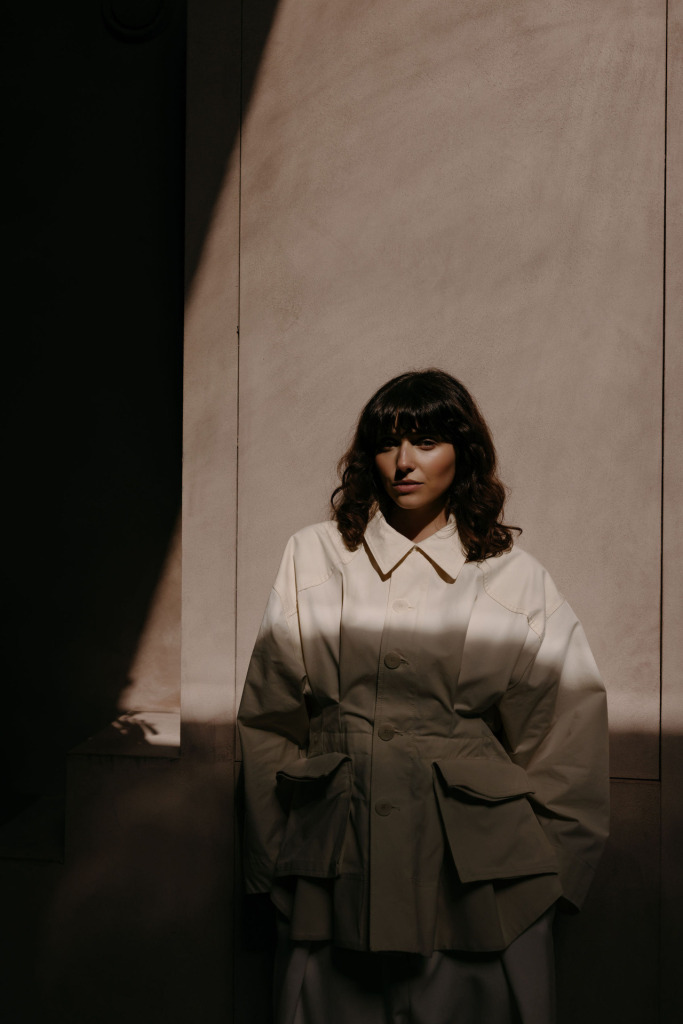
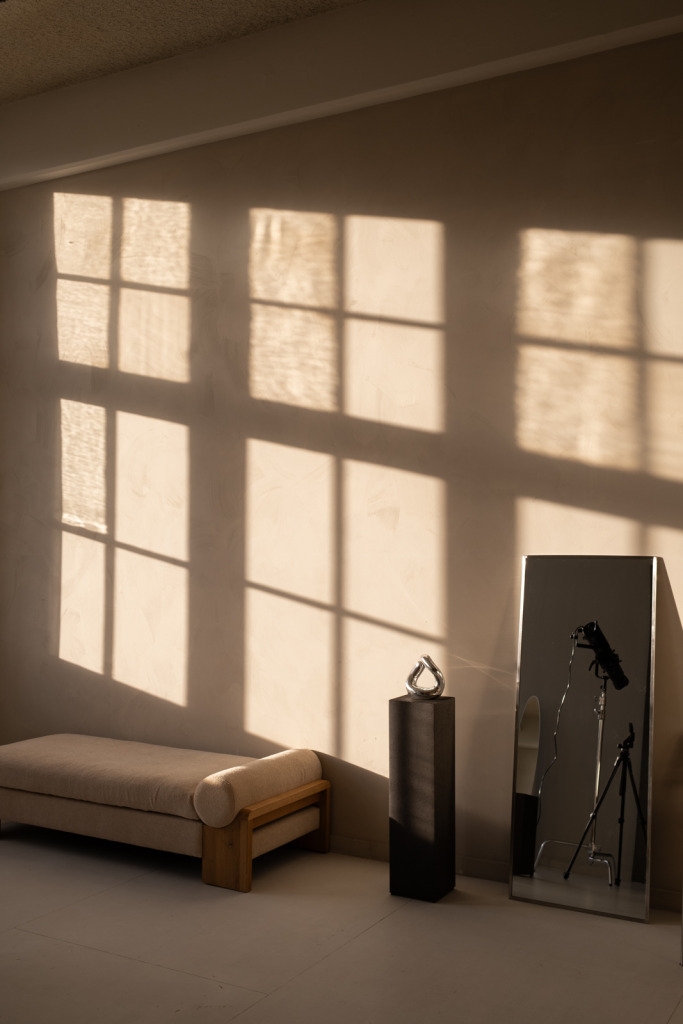
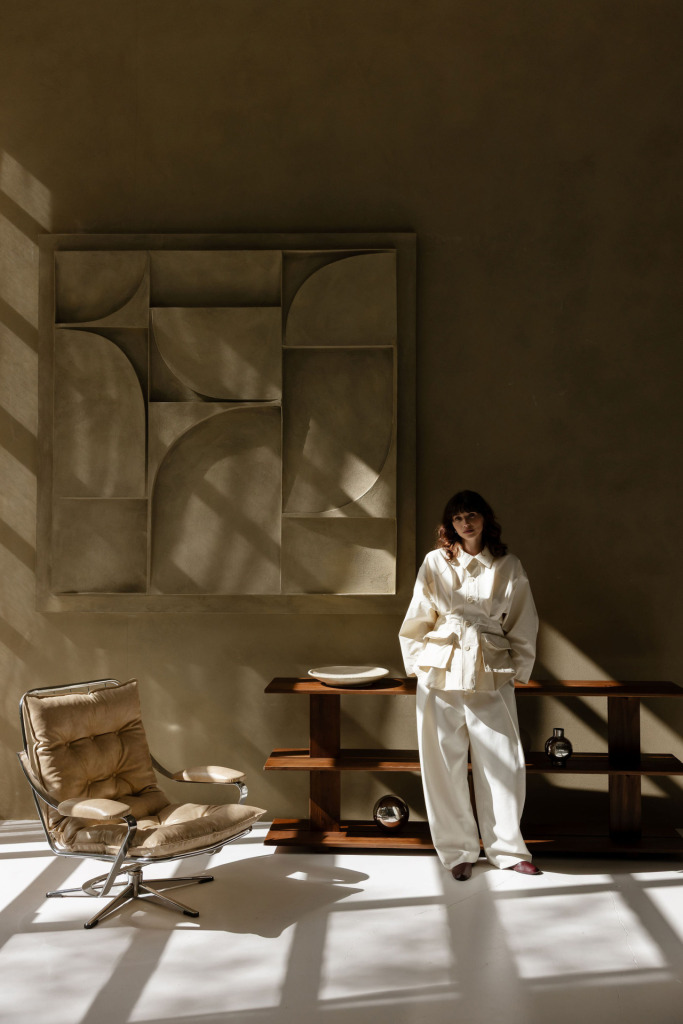
We're used to thinking of a window as a source of light, but during a creative shoot, it's just as interesting as a source of shadow. The direction of the light determines where your shadow falls. Position your model directly opposite the window and you'll get relatively even lighting. Turn your model a quarter turn and suddenly you create more contrast between light and dark. Then turn your model slightly away from the window and the shadow becomes part of the face. It might sound like a tiny adjustment, but on camera it can make a huge difference.
Our tip: during your shoot, don't just look at where the light falls. Pay attention to where it doesn't. That darker area? It might be exactly what your image needs. The same goes for smartphone photography. You don't need a professional camera to experiment with light and shadow. Place your model next to a window, slowly turn her away from the light and take several photos from the same position. You'll be surprised by how much difference a few degrees can make.
We're used to thinking of a window as a source of light, but during a creative shoot, it's just as interesting as a source of shadow. The direction of the light determines where your shadow falls. Position your model directly opposite the window and you'll get relatively even lighting. Turn your model a quarter turn and suddenly you create more contrast between light and dark. Then turn your model slightly away from the window and the shadow becomes part of the face. It might sound like a tiny adjustment, but on camera it can make a huge difference.
Our tip: during your shoot, don't just look at where the light falls. Pay attention to where it doesn't. That darker area? It might be exactly what your image needs. The same goes for smartphone photography. You don't need a professional camera to experiment with light and shadow. Place your model next to a window, slowly turn her away from the light and take several photos from the same position. You'll be surprised by how much difference a few degrees can make.
2. The best time to photograph with natural light
One of the best things about photographing with natural light? You can't completely control it.
In our daylight studios, the light changes throughout the day, and so do your shadows. In the morning, the light can be low and directional, creating long shadows. Later in the day, the light may become softer and more diffused, giving your images an entirely different feel.
This means that the time you book your studio doesn't just affect the brightness of your photographs. It also influences the visual language of your shoot. Looking for defined shadows and more contrast? Choose a time when the sunlight is more direct. Going for soft, almost dreamy imagery? Diffused daylight is your best friend. Want to know more so you can time your shoot perfectly? Read our blog about the best times of day for sunlight in our daylight studios.
Pro tip: before your shoot begins, take a few test shots in different areas of the studio. Not just to check your exposure, but to see where the most interesting shadows appear.
This means that the time you book your studio doesn't just affect the brightness of your photographs. It also influences the visual language of your shoot. Looking for defined shadows and more contrast? Choose a time when the sunlight is more direct. Going for soft, almost dreamy imagery? Diffused daylight is your best friend. Want to know more so you can time your shoot perfectly? Read our blog about the best times of day for sunlight in our daylight studios.
Pro tip: before your shoot begins, take a few test shots in different areas of the studio. Not just to check your exposure, but to see where the most interesting shadows appear.
3. Let flowers, leaves and other shapes break your light
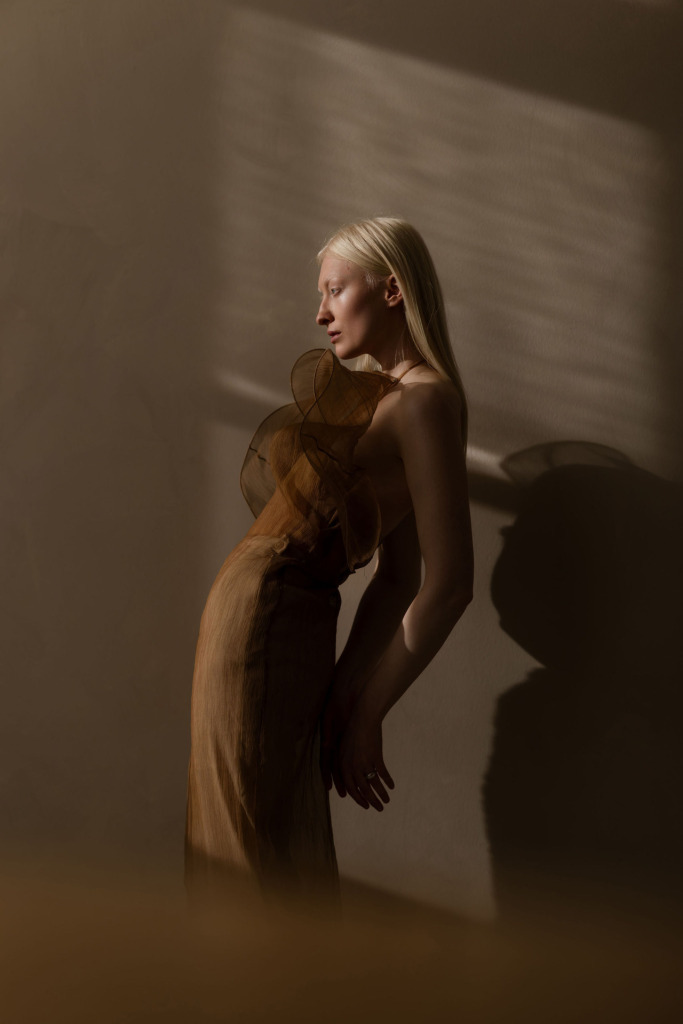
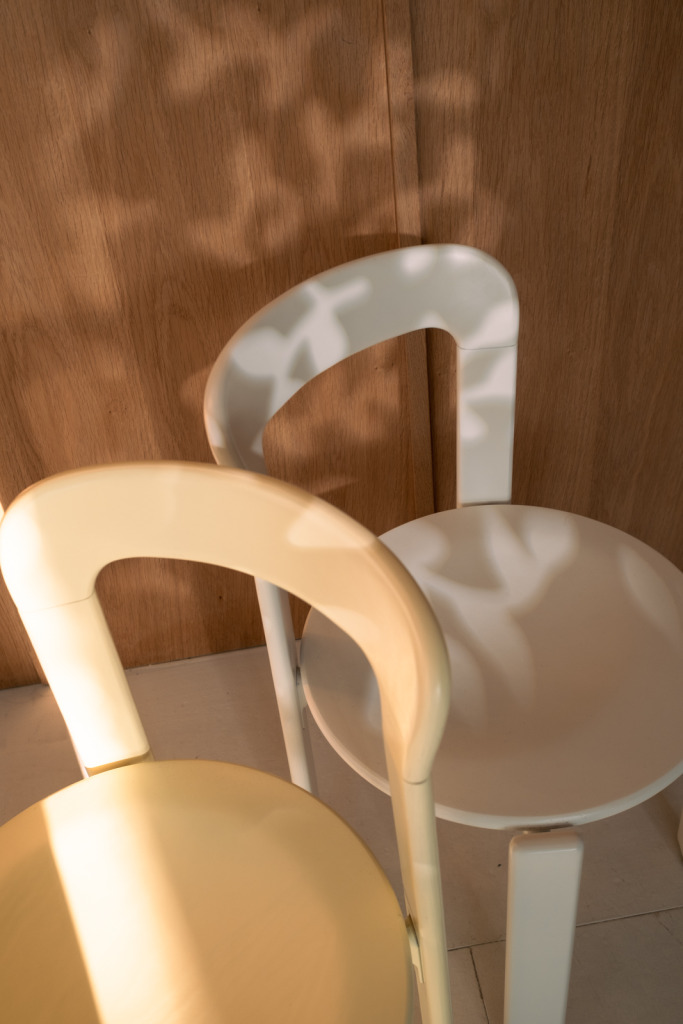
This is one of our favourite ways to make shadows more interesting. Place a flower, branch or plant between your light source and your model. That's it. The shape of the leaves or petals then literally becomes part of your image. Depending on the distance between your light source, the object and your model, you'll get completely different results. Place the object close to the light source and the shadow may become softer and larger. Move it closer to your model and the shape will often become more defined and graphic.
So play around with distance. During an editorial fashion shoot, you could use a large leaf to cast an abstract shadow across the body. For a beauty shoot, try holding a single flower in front of the face. Or place a bouquet just outside the frame to create an unexpected shadow across the background. Tip: take a look at our photoshoot with artificial flowers in The Playground for even more inspiration.
The beauty of this type of shadow is that it doesn't need to be perfect. A slightly blurred flower shadow moving across a face can be far more intriguing than a perfectly defined pattern. Think less Pinterest-perfect. More beautifully unpredictable.
This is one of our favourite ways to make shadows more interesting. Place a flower, branch or plant between your light source and your model. That's it. The shape of the leaves or petals then literally becomes part of your image. Depending on the distance between your light source, the object and your model, you'll get completely different results. Place the object close to the light source and the shadow may become softer and larger. Move it closer to your model and the shape will often become more defined and graphic.
So play around with distance. During an editorial fashion shoot, you could use a large leaf to cast an abstract shadow across the body. For a beauty shoot, try holding a single flower in front of the face. Or place a bouquet just outside the frame to create an unexpected shadow across the background. Tip: take a look at our photoshoot with artificial flowers in The Playground for even more inspiration.
The beauty of this type of shadow is that it doesn't need to be perfect. A slightly blurred flower shadow moving across a face can be far more intriguing than a perfectly defined pattern. Think less Pinterest-perfect. More beautifully unpredictable.
4. Make a projector your secret creative weapon
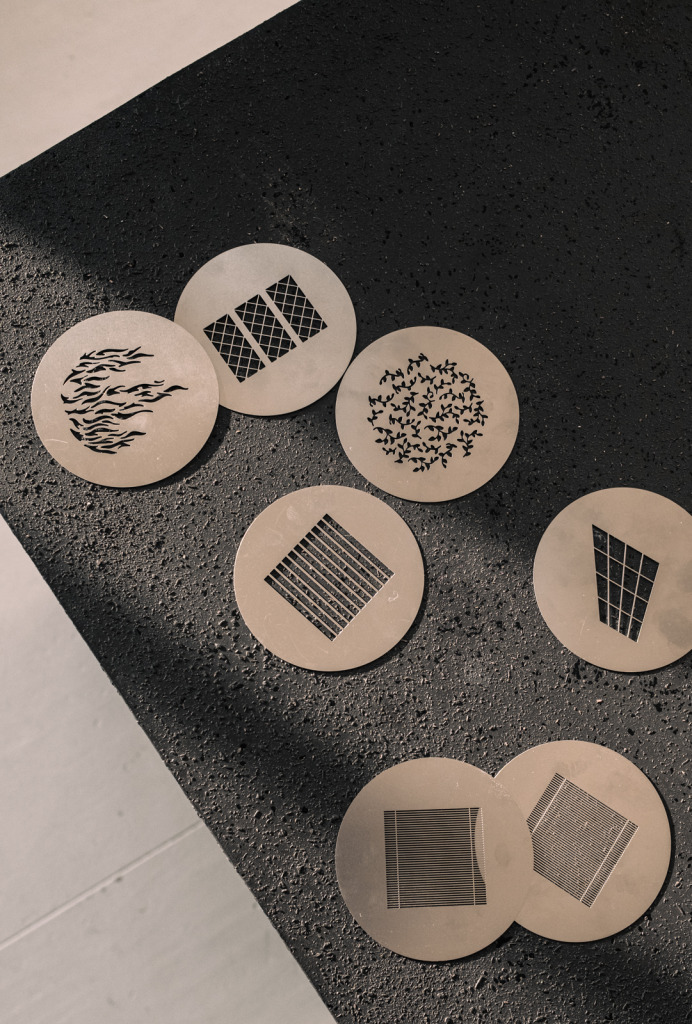
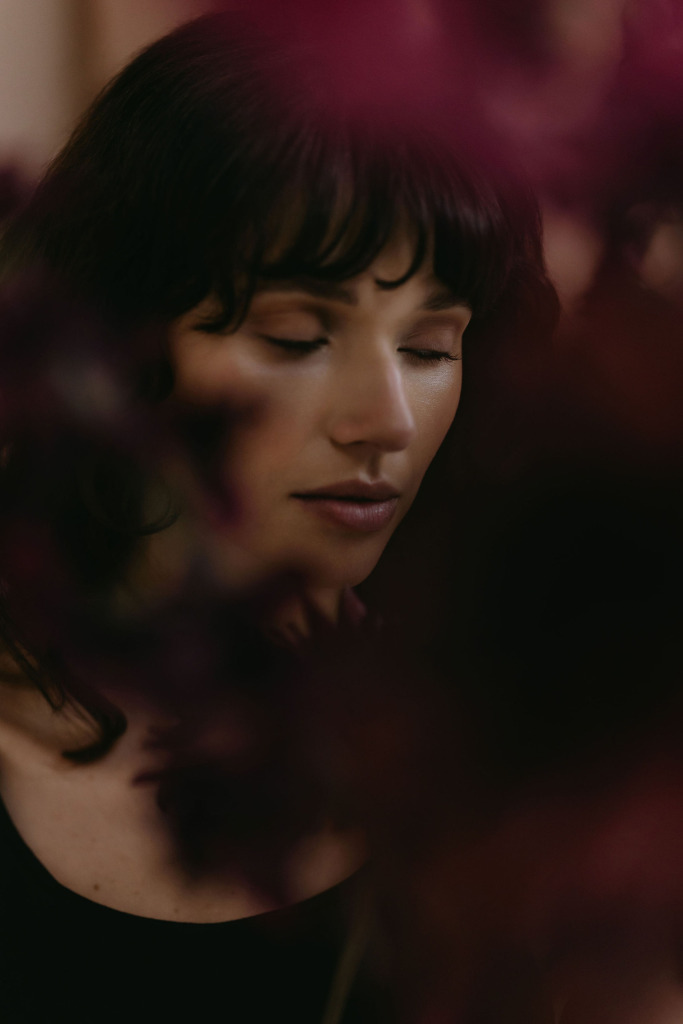
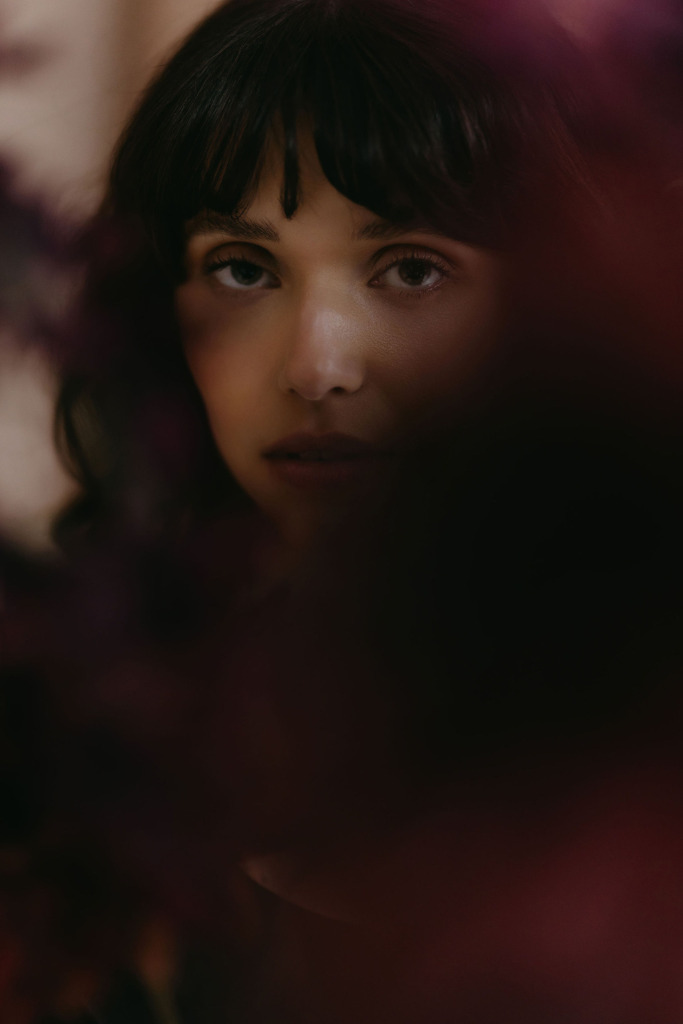
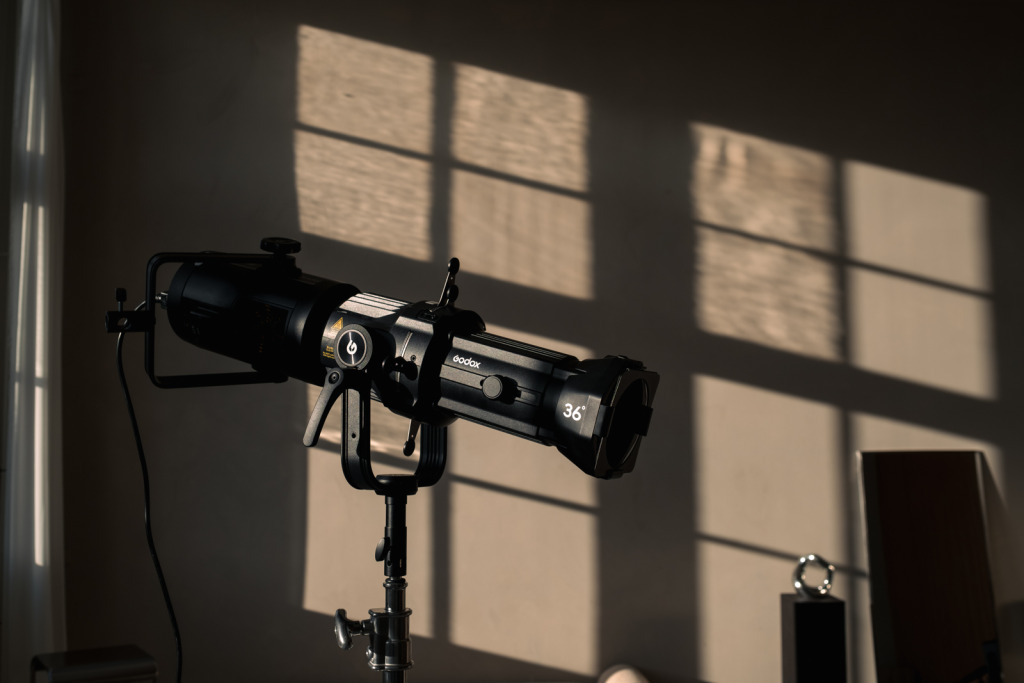
Want to take your shadow game to the next level? Add a projector. Project an image, texture, pattern or video onto a wall, model or object and use it as an extra layer in your composition. The result instantly feels more editorial. For next-level imagery, try the Godox spotlight and Gobo set in The Livingroom. You can endlessly experiment with patterns, contrast and storytelling. Several creatives have already been making the most of it — and consider yourself warned... Once you start playing, it's hard to stop.
Want to take your shadow game to the next level? Add a projector. Project an image, texture, pattern or video onto a wall, model or object and use it as an extra layer in your composition. The result instantly feels more editorial. For next-level imagery, try the Godox spotlight and Gobo set in The Livingroom. You can endlessly experiment with patterns, contrast and storytelling. Several creatives have already been making the most of it — and consider yourself warned... Once you start playing, it's hard to stop.
5. Create shadows with curtains and textiles
A semi-transparent curtain , like the ones in our studios, creates a soft, diffused shadow. A thicker, heavier material creates more contrast. Lace fabric creates a delicate pattern. You can even experiment with clothing, mesh, voile or a piece of fabric from your styling kit. For content creators, this is such a great hack because you can create imagery that feels much more produced with very minimal resources.
Especially for Reels and TikToks, moving shadows can add so much to your content. Try slowly moving a curtain while filming. The shadow moves across the wall with it, instantly creating a sense of movement: even if your model is barely moving at all.
A semi-transparent curtain , like the ones in our studios, creates a soft, diffused shadow. A thicker, heavier material creates more contrast. Lace fabric creates a delicate pattern. You can even experiment with clothing, mesh, voile or a piece of fabric from your styling kit. For content creators, this is such a great hack because you can create imagery that feels much more produced with very minimal resources.
Especially for Reels and TikToks, moving shadows can add so much to your content. Try slowly moving a curtain while filming. The shadow moves across the wall with it, instantly creating a sense of movement: even if your model is barely moving at all.

6. Mix natural light with artificial light
Natural light is beautiful. But that doesn't mean you always have to follow it completely.
In fact, combining different light sources can create some really interesting results.
Use daylight as a soft base, for example, then add a continuous light to highlight one specific area of your image. Or use a lamp intentionally to create a harder shadow whilst keeping the rest of the image soft.
For photographers, it's a great way to gain more control without losing the natural atmosphere of a daylight studio. Point your light at one object, one side of the face or a detail in the clothing. Let the rest of the image fall slightly darker. The contrast between soft daylight and more focused artificial light creates an image with much more depth.
For photographers, it's a great way to gain more control without losing the natural atmosphere of a daylight studio. Point your light at one object, one side of the face or a detail in the clothing. Let the rest of the image fall slightly darker. The contrast between soft daylight and more focused artificial light creates an image with much more depth.
7. Stop trying to get rid of your shadows
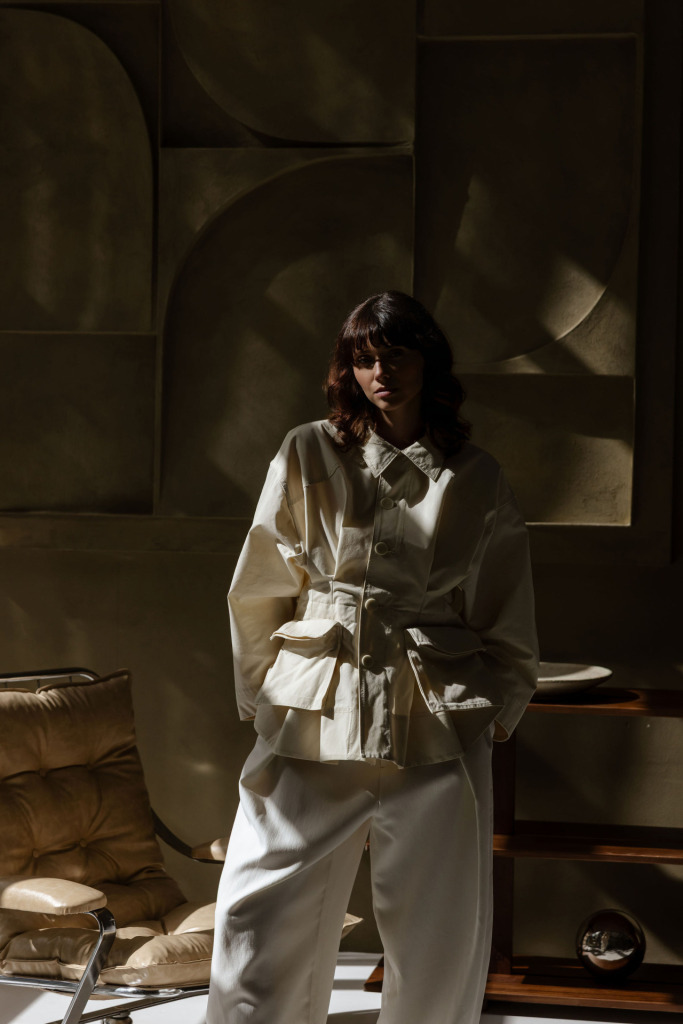
This might just be the most important tip of all. Not every image needs to be bright, even and perfectly lit. In fact, sometimes what you don't see is exactly what makes an image interesting. A shadow can add mystery. A silhouette can draw attention to the shape of a body or a garment. Especially in editorial photography, you don't need every single detail to be visible. So before you start lifting the shadows in post-production and trying to correct every dark area, take another look. Does the shadow actually need fixing? Or does it make your image?
This might just be the most important tip of all. Not every image needs to be bright, even and perfectly lit. In fact, sometimes what you don't see is exactly what makes an image interesting. A shadow can add mystery. A silhouette can draw attention to the shape of a body or a garment. Especially in editorial photography, you don't need every single detail to be visible. So before you start lifting the shadows in post-production and trying to correct every dark area, take another look. Does the shadow actually need fixing? Or does it make your image?
Bonus: Photographing shadows with your smartphone
You don't need a professional camera to experiment.
In fact, smartphone photography is perfect for quickly playing around with light.
Try this:
☼ Place your model next to a window. Start facing the light and slowly turn her away from it.
☼ Tap on the brightest part of your screen. Your phone will adjust the exposure, making the overall image darker and your shadows more intense.
☼ Use the exposure slider. On an iPhone, you can manually lower the exposure after focusing. This can instantly give your image a more editorial feel.
☼ Shoot through something. A flower, transparent fabric or even a glass can add an extra layer to your image.
☼ Don’t zoom. Instead, move closer yourself. Especially when shooting on a smartphone, this will help you maintain more image quality. And perhaps the most important tip:
☼ Look up, down and behind you. Sometimes the most beautiful shadow in your shoot isn't on your model at all, but on the wall behind her.
☼ Place your model next to a window. Start facing the light and slowly turn her away from it.
☼ Tap on the brightest part of your screen. Your phone will adjust the exposure, making the overall image darker and your shadows more intense.
☼ Use the exposure slider. On an iPhone, you can manually lower the exposure after focusing. This can instantly give your image a more editorial feel.
☼ Shoot through something. A flower, transparent fabric or even a glass can add an extra layer to your image.
☼ Don’t zoom. Instead, move closer yourself. Especially when shooting on a smartphone, this will help you maintain more image quality. And perhaps the most important tip:
☼ Look up, down and behind you. Sometimes the most beautiful shadow in your shoot isn't on your model at all, but on the wall behind her.
Light and shadow: The styling tools of your photoshoot
A great photoshoot isn't always about finding the perfect light.
Sometimes it's about making the light you have interesting.
A curtain moving slowly in the breeze. Sunlight falling through a window at exactly the right moment. A projector casting an abstract pattern across a wall.
These are the moments when an image becomes more than just a beautiful photograph.
It gets a feeling.
So the next time you're planning a shoot, don't just look at your mood board. Look at the way the light falls. Think about the possibilities for shadows.
Because sometimes the most interesting styling isn't something you add to your set. It's what you let the light do.
Because sometimes the most interesting styling isn't something you add to your set. It's what you let the light do.