
In editorial photography, the magic doesn’t start with the camera—it starts with the body. The tension. How the silhouette catches the light. While catalogue work often demands clean and neat lines, editorial photography thrives on asymmetry and deviation.
In our daylight studio in Amsterdam, we’ve seen how a subtle shift in posture can elevate an image from merely aesthetic to striking.
The five poses in this blog post form a solid foundation. No gimmicks—just postures that allow for tension, asymmetry, and control. When used consciously, they can effortlessly lift a shoot to editorial level.
The five poses in this blog post form a solid foundation. No gimmicks—just postures that allow for tension, asymmetry, and control. When used consciously, they can effortlessly lift a shoot to editorial level.
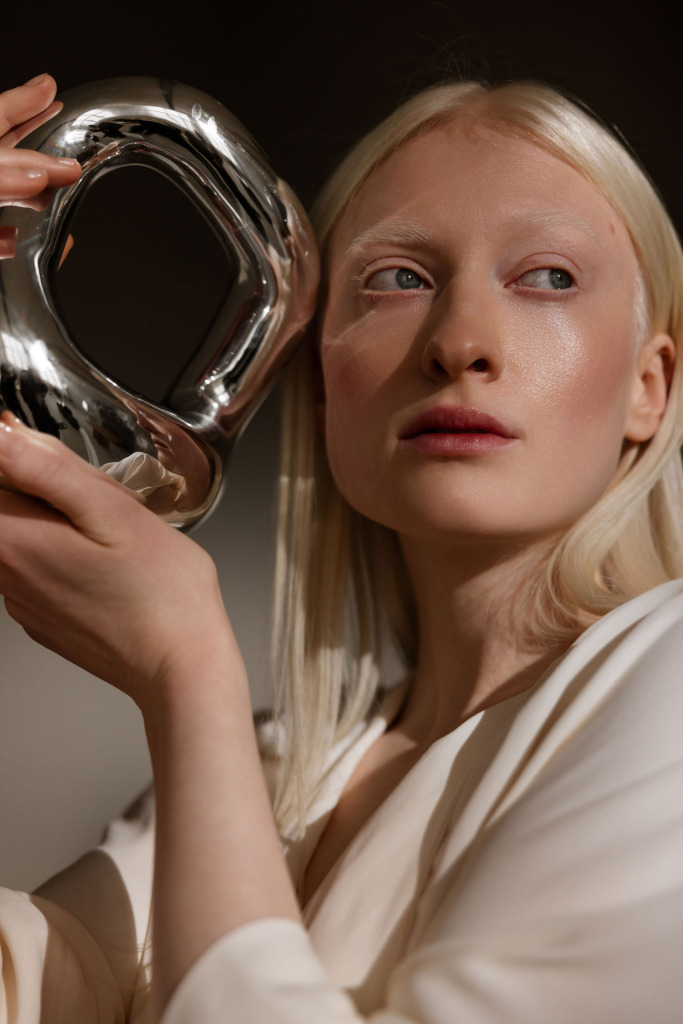
Who needs these poses?
Your campaign instantly looks more international and high-end.
These poses are exactly what agencies want to see in your portfolio.
They’re a safe starting point before experimenting.
1. The power lean
Why it works:
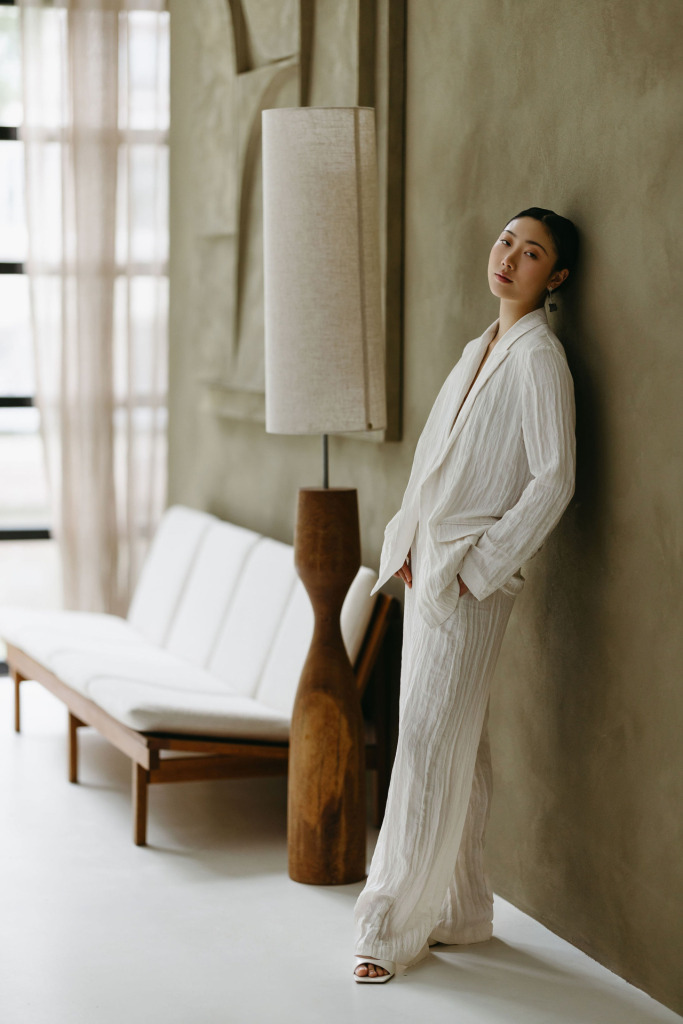
Leaning creates diagonal lines, and diagonals create tension—hallmarks of editorial photography. Insider tip: don’t just have your model stand against a wall. Let their weight rest on one hip and play with negative space on one side of the frame. This pose gives strength, attitude, and elongates the model’s silhouette instantly.
Why it works:
Leaning creates diagonal lines, and diagonals create tension—hallmarks of editorial photography. Insider tip: don’t just have your model stand against a wall. Let their weight rest on one hip and play with negative space on one side of the frame. This pose gives strength, attitude, and elongates the model’s silhouette instantly.
2. The walking freeze
Why it works:
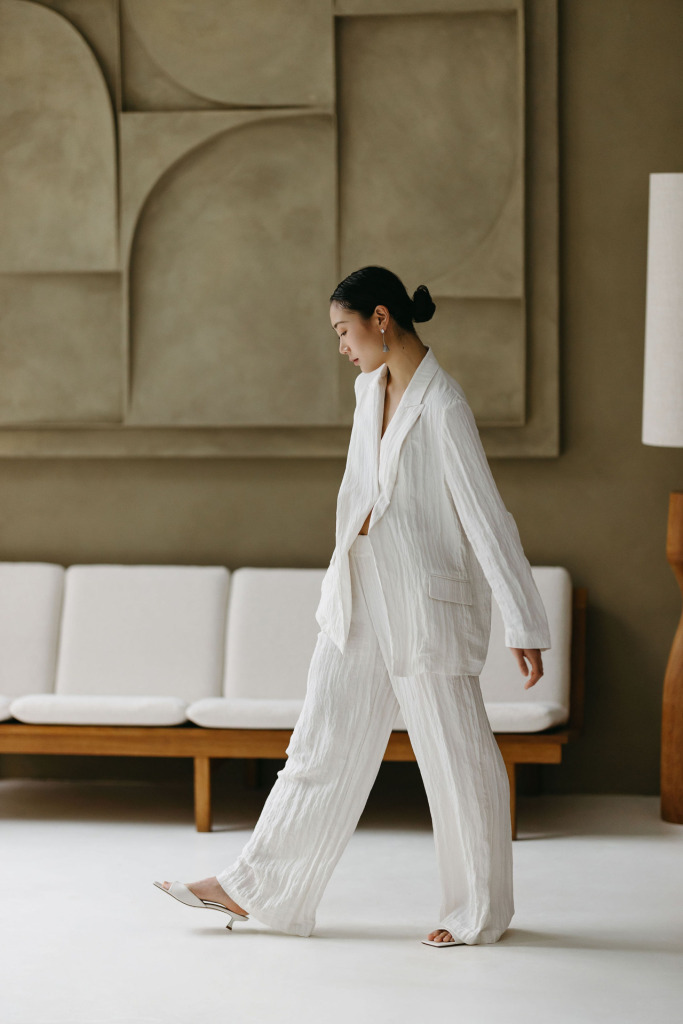
Movement without actually moving. A step that’s frozen mid-motion looks more natural than a static pose. Keep steps small, expressions neutral, and avoid overly symmetrical arms—otherwise you get catalogue vibes. Pro-tip: Have your model imagine walking past someone they’re not impressed with. Subtle attitude changes everything.
Why it works:
Movement without actually moving. A step that’s frozen mid-motion looks more natural than a static pose. Keep steps small, expressions neutral, and avoid overly symmetrical arms—otherwise you get catalogue vibes. Pro-tip: Have your model imagine walking past someone they’re not impressed with. Subtle attitude changes everything.
3. The structured sit
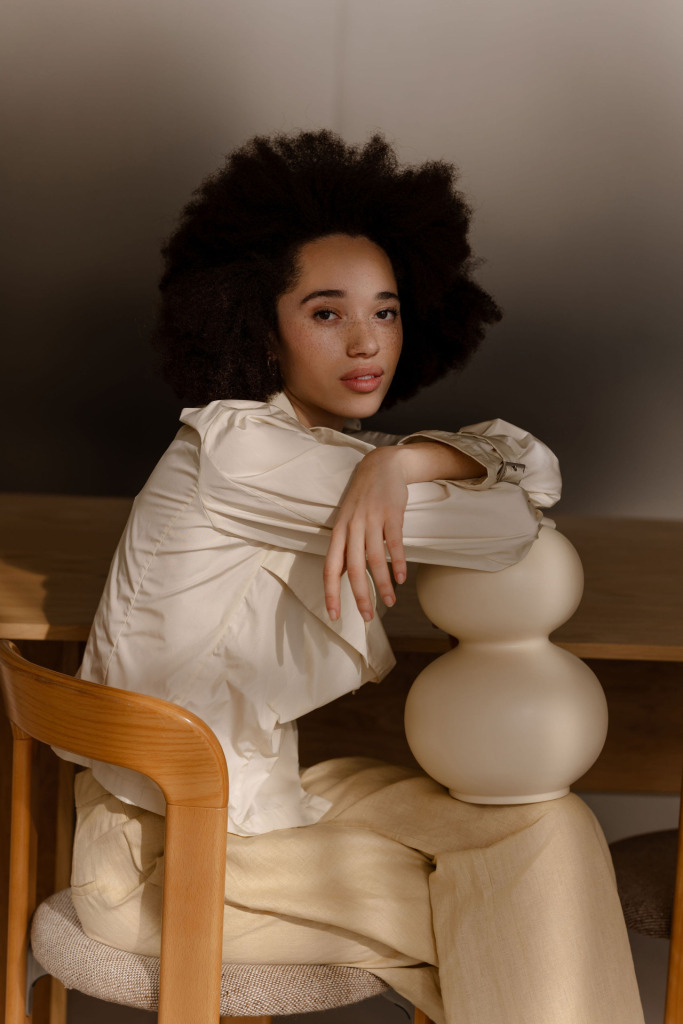
In fashion photography Sitting in fashion photography can shorten the body, but here’s how to keep it editorial:Knees slightly apart → creates asymmetry Don’t rest the back fully on the chair Raise one shoulder slightly higher
Pro-tip: Position your model perpendicular to the window light for sculpted cheekbones and jawline.
In fashion photography Sitting in fashion photography can shorten the body, but here’s how to keep it editorial:
Pro-tip: Position your model perpendicular to the window light for sculpted cheekbones and jawline.
4. The over-the-shoulder editorial turn
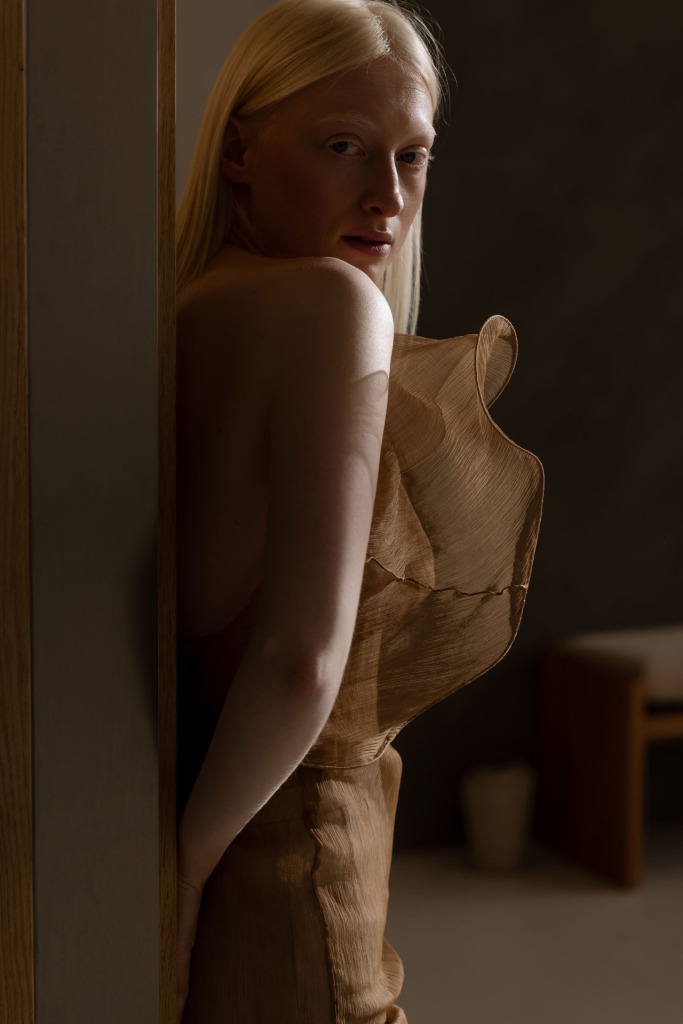
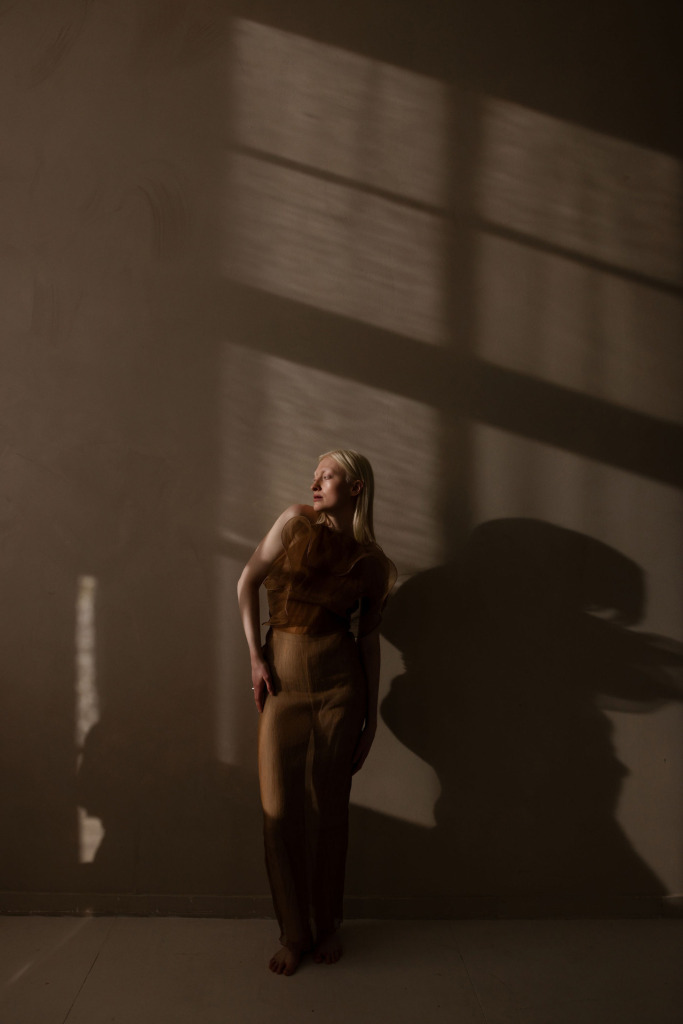
Everyone thinks they know this pose (“look over your shoulder”), but in editorial it only works when executed perfectly. Common mistake: model turns, looks back, and smiles → immediately commercial, too safe. What works: first rotate the body, not just the head. Weight on one leg, slight shoulder twist, then the gaze follows. Neck elongated, chin slightly forward to catch the light. Hands relaxed. Mouth soft, neutral, or slightly open. Presence over smile.
Why it’s strong:
Because he does several things at once without it feeling forced. You can see the back of the silhouette (important in fashion). The twist in the body creates line and depth. And the glance back at the camera adds just enough tension.
The image becomes more interesting because it is not entirely frontal. It invites, but does not explain everything. And that is precisely where the power of editorial lies: you show something, but never everything.
Everyone thinks they know this pose (“look over your shoulder”), but in editorial it only works when executed perfectly. Common mistake: model turns, looks back, and smiles → immediately commercial, too safe. What works: first rotate the body, not just the head. Weight on one leg, slight shoulder twist, then the gaze follows. Neck elongated, chin slightly forward to catch the light. Hands relaxed. Mouth soft, neutral, or slightly open. Presence over smile.
Why it’s strong:
Because he does several things at once without it feeling forced. You can see the back of the silhouette (important in fashion). The twist in the body creates line and depth. And the glance back at the camera adds just enough tension.
The image becomes more interesting because it is not entirely frontal. It invites, but does not explain everything. And that is precisely where the power of editorial lies: you show something, but never everything.
5. The negative space pose
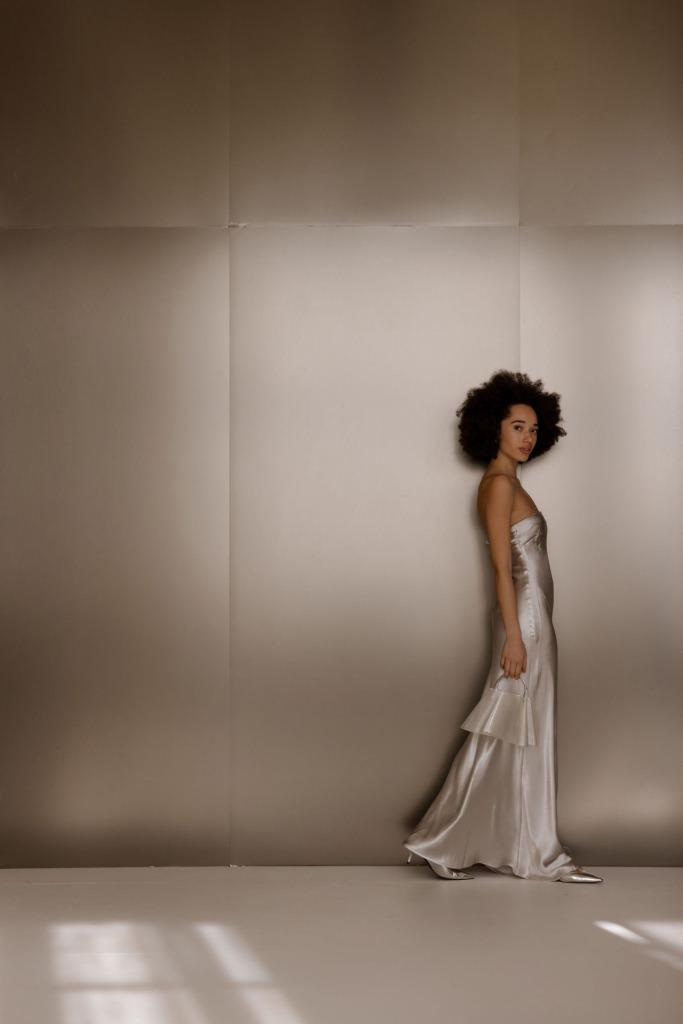
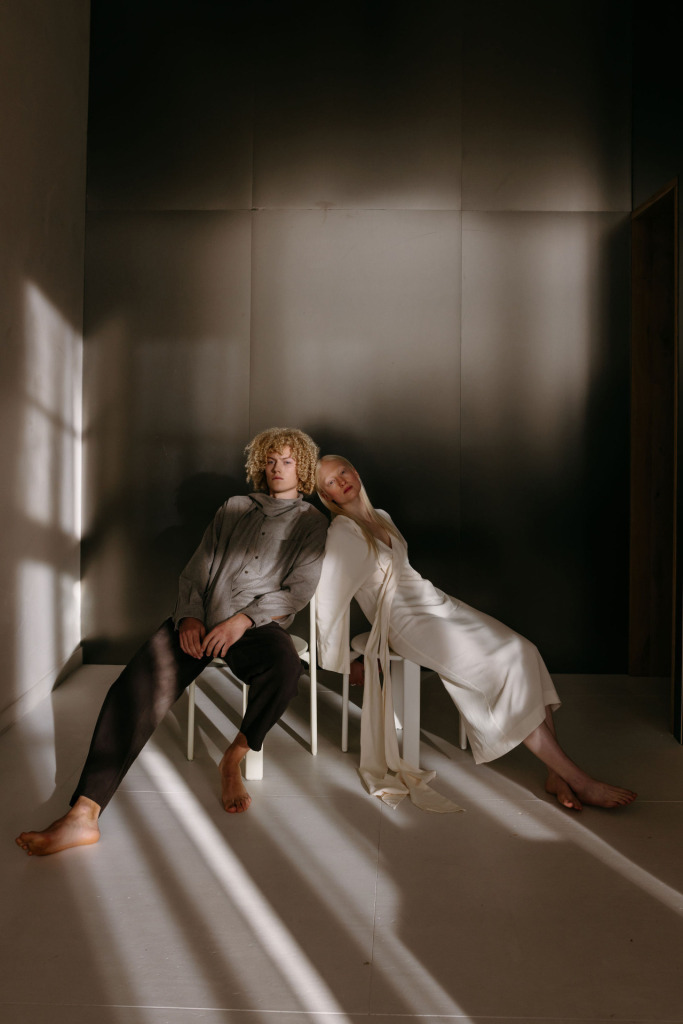
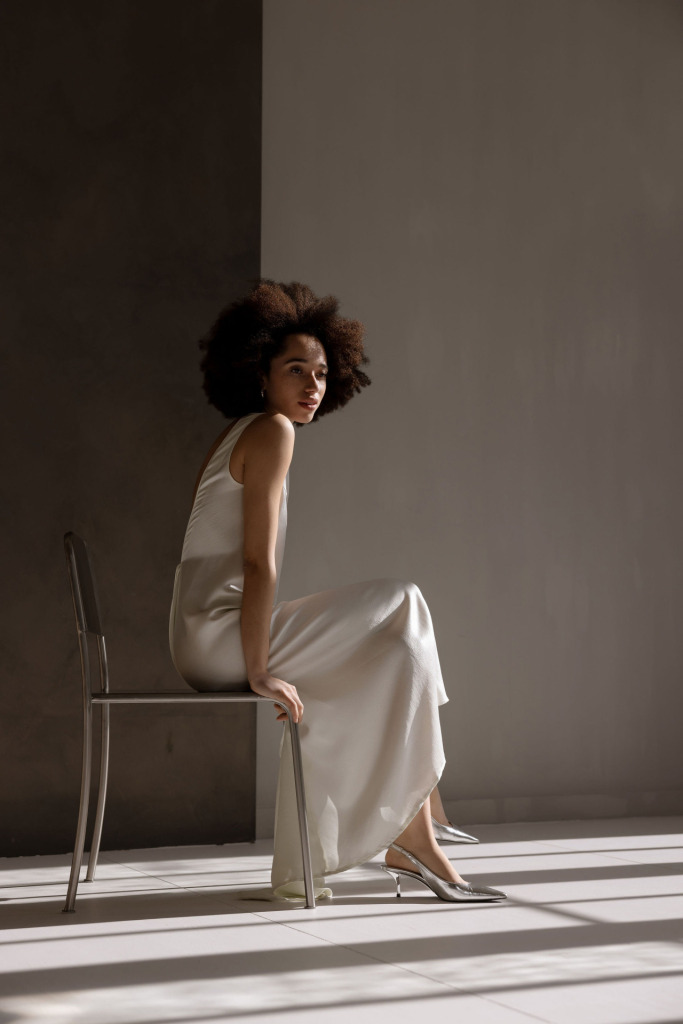
This is where you often see the difference between a good shoot and a truly strong editorial. The tendency is to fill the frame, but editorial photography requires the opposite. Dare to take a step back. Instead of placing the model prominently in the centre, give the body some space. Leave room above the head. Next to the silhouette. Around the movement. That emptiness makes the image calmer, more powerful and automatically more luxurious.
This works particularly well in our daylight studio. Soft window light subtly fills the space, ensuring that the image never feels bare. It feels well thought out. Editorial. As if it were already on a magazine page. This is what you want!
This is where you often see the difference between a good shoot and a truly strong editorial. The tendency is to fill the frame, but editorial photography requires the opposite. Dare to take a step back. Instead of placing the model prominently in the centre, give the body some space. Leave room above the head. Next to the silhouette. Around the movement. That emptiness makes the image calmer, more powerful and automatically more luxurious.
This works particularly well in our daylight studio. Soft window light subtly fills the space, ensuring that the image never feels bare. It feels well thought out. Editorial. As if it were already on a magazine page. This is what you want!
What makes a pose editorial (and not catalogue)?
It’s rarely the pose itself—it’s:Tension in the hands Asymmetry Micro-expressions Weight on one point Control over the jawline in natural light
Editorial is controlled imperfection.
Editorial is controlled imperfection.
Daylight shows everything immediately—every detail matters. That’s why these five poses are so reliable: used correctly, they work every time.